The brief
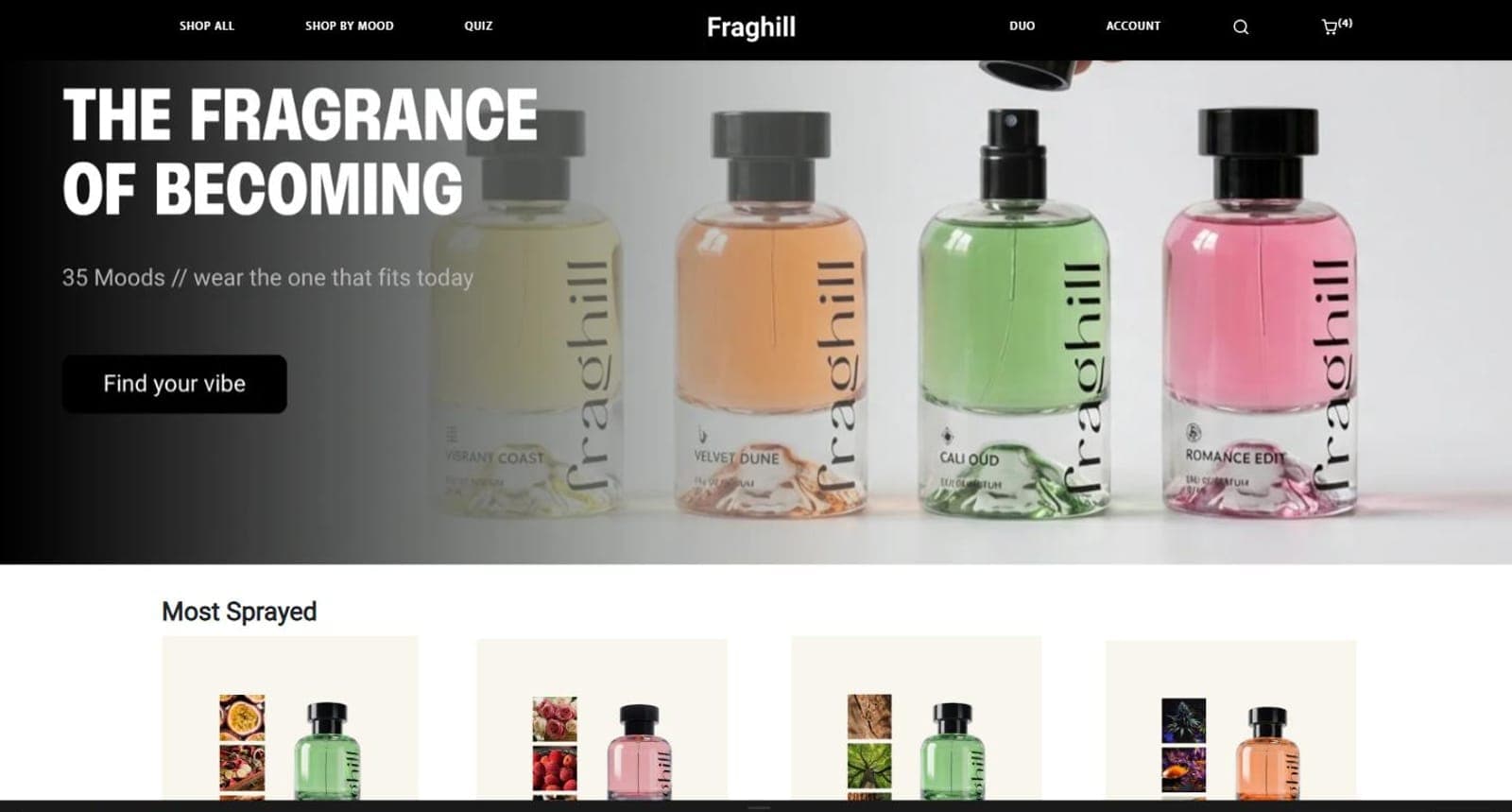
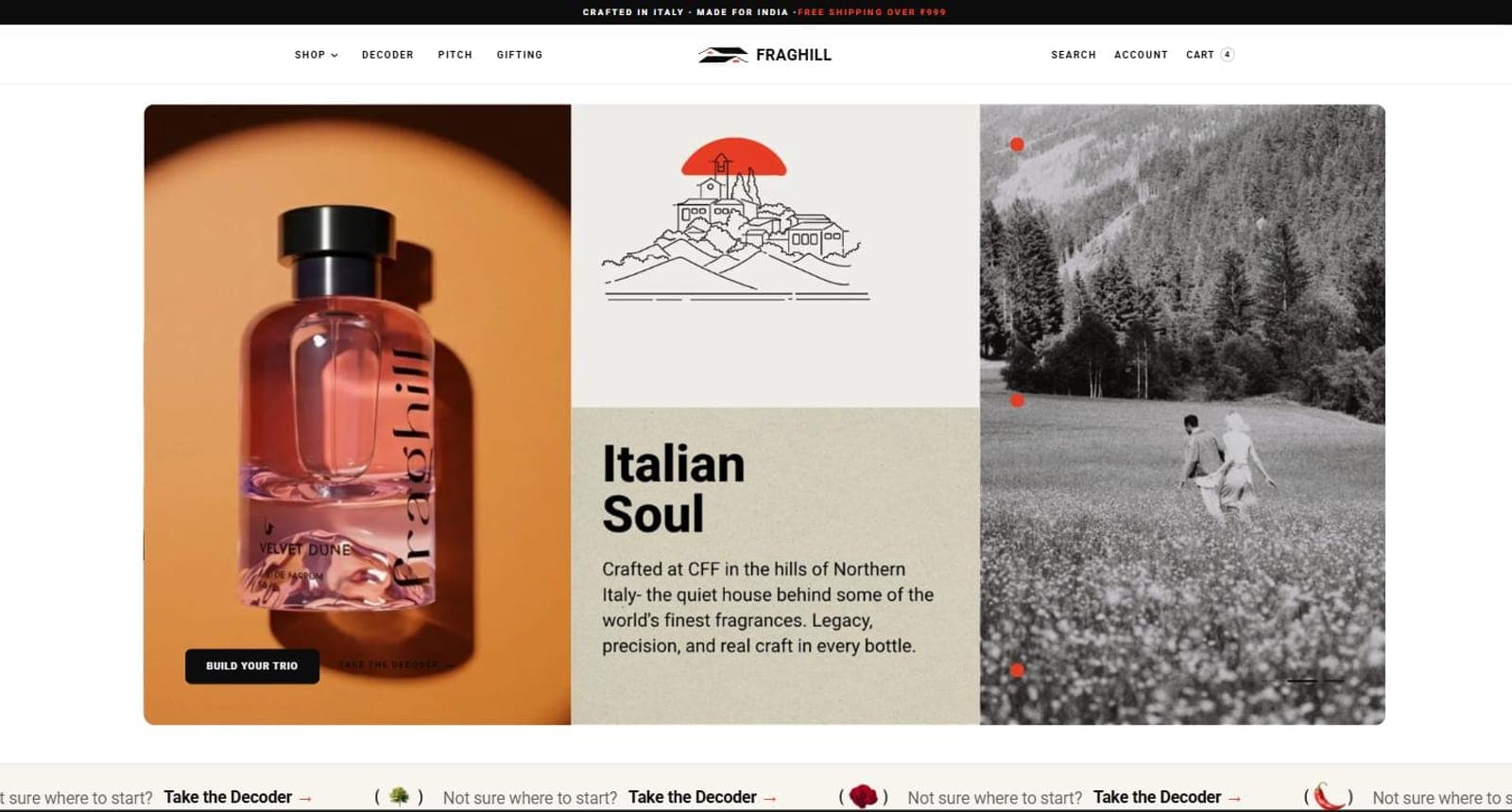
Fraghill sells eau de parfum made at CFF in the hills of northern Italy, at 18 percent oil concentration, to Indian customers who have mostly never heard of CFF. That is a hard sell to make cold, and the store was making it harder.
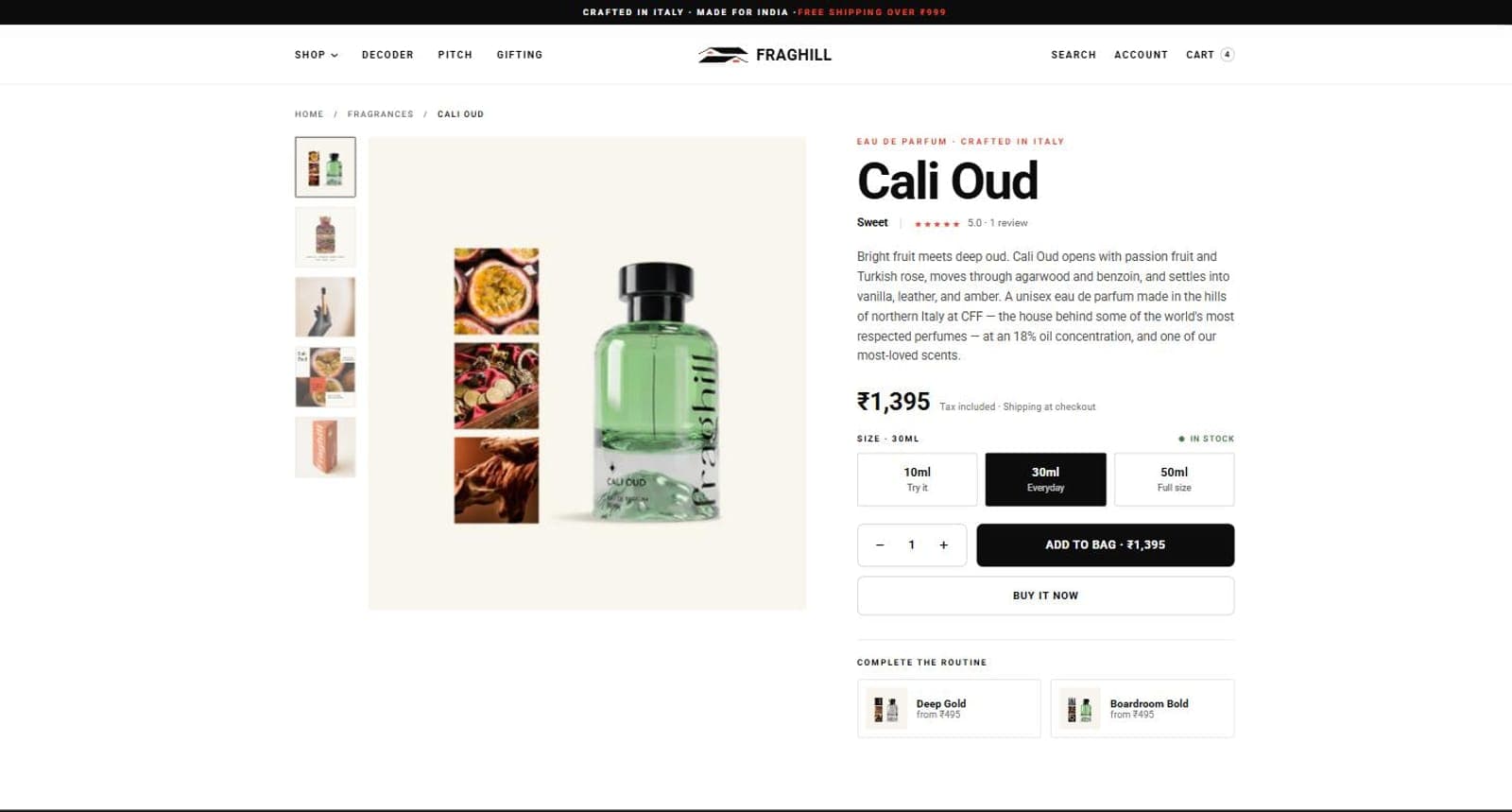
The cheapest thing a first-time buyer could put in a basket was ₹1,395. For a category bought almost entirely on trust in how something smells, asking someone to spend ₹1,395 before they have smelled it is asking for the sale twice. The 10 ml size existed in the catalogue. It was not reachable from the product page.
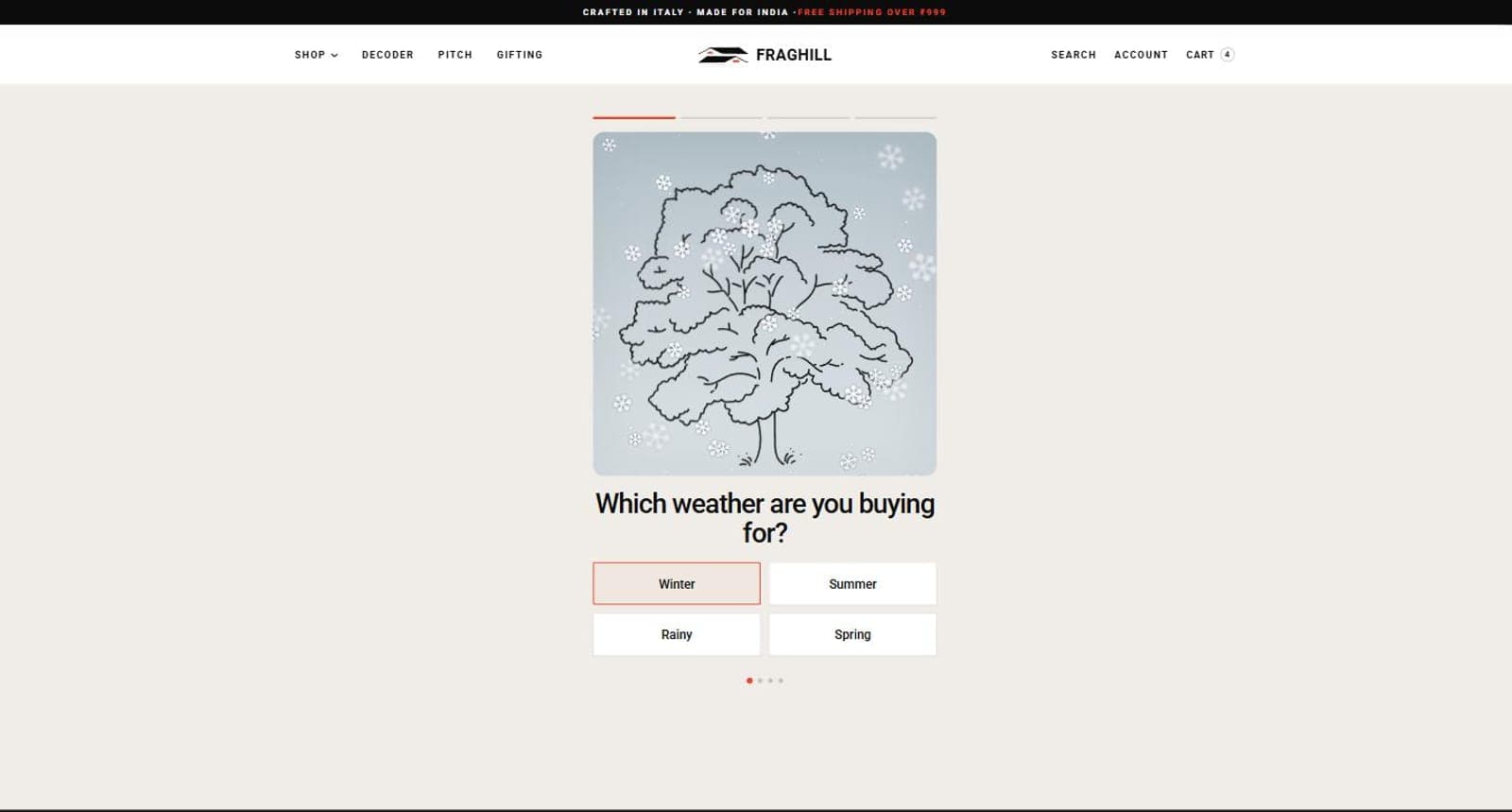
The same was true one level up. Thirty millilitre and fifty millilitre variants existed on all 35 fragrances and appeared on none of the product pages, so the store was quietly selling one size of everything. There was a quiz on the homepage that asked four questions, collected an email address, told the customer to check their inbox, and then did nothing with either. And the trio bundle was charging ₹1,485 for three pods that the brand had priced at ₹1,095.
What we did
We did not edit the live theme. Fraghill was trading throughout, so the rebuild happened on a parallel theme, 93 custom files, and went live as a single swap on 15 July with no downtime and no maintenance page.
The way in. Ten millilitre went from a catalogue entry to the entry point, across all 35 fragrances, and the two millilitre was retired. The cheapest way to try a Fraghill is now ₹495. Every product page carries all three sizes with the 30 ml preselected, which is the size the brand wants to sell and the one that was previously invisible.
The Decoder. The quiz was rewritten to actually recommend something, and hooked up to an Omnisend welcome sequence, so the email it asks for now gets used. The recommendation logic behind it, and the Match Maker dupe finder that lets someone search by a fragrance they already wear, were engineered by Arnav. We integrated and hardened both.
Build Your Trio. A configurator for the three-pod bundle, wired to a Shopify automatic discount so the price at checkout is the ₹1,095 the brand intended rather than the ₹1,485 the cart was calculating.
The rest of the shop. A Cover Cards treatment on the product page that gives each fragrance somewhere to tell its story, a gifting space with twelve gift sets built for the season, the GoKwik checkout ported across, eighteen metafield definitions so the catalogue is structured rather than pasted, and SEO copy written across thirteen collections. Forty-nine products are live: thirty-seven fragrances and twelve gift sets.
The tracking problem
While auditing the store we pulled the order records and found checkout_token empty on all 250 orders in the sample. Read straight, that means the purchase events firing back to ad platforms had nothing to tie them to a specific checkout, so the store had been spending on ads it could not properly attribute.
This one is worth stating carefully: it is a strong inference from the order data and the GoKwik integration's behaviour, and we have not confirmed it at source with GoKwik. We flagged it, and it is the first thing to verify against real numbers rather than something to claim as a fix.
What we are not claiming yet
The store went live on 15 July. The pre-launch baseline, taken across the ninety days to 14 July, was 249 orders at an average order value of ₹1,027, or ₹2,55,831.
We are deliberately not putting a result next to that. A fortnight of trading after a price architecture change is not evidence, and any number we published now would be noise dressed as proof. The thirty and sixty day pulls are booked for 15 August and 15 September, and this page gets updated then.
One thing we would do differently: check the checkout token integrity in week one rather than during a catalogue audit in week five. It is a two-minute query and it was the single most expensive thing wrong with the store.